 Pelion, SC
TPO vs PVC Roofing: Differences, Lifespan of PVC Roof Panels, and How to Tell Which Material Is Best for Your Property
When your property needs a new flat or low-slope roof, two materials often lead the discussion, TPO and PVC roofing. Both systems offer strong protection, energy efficiency, and long-term value. But when comparing TPO vs PVC roofing, which material fits your property better?
This guide explains what PVC roofing is, reviews the benefits of PVC roofing material, shows you how to tell the difference between TPO and PVC roofing, and reveals how long PVC roof panels last. By the end, you will understand how these roofing systems differ and which one provides the durability and performance you need.
What Is TPO Roofing?
TPO roofing, short for Thermoplastic Olefin, is a single-ply membrane made from rubber, ethylene, and polypropylene. It is designed for commercial and residential flat roofs, delivering reliable protection with strong energy performance.
Property owners choose TPO roofing for three main reasons:
- It is highly reflective, helping reduce cooling costs.
- It is environmentally friendly, containing no chlorine and often recyclable.
- It is resistant to UV rays, punctures, and algae growth, which reduces upkeep.
Seams on a TPO roof are heat-welded, forming a watertight seal that resists leaks. When properly installed, TPO roofing can last 20 to 30 years, offering long-lasting protection and value.
What Is PVC Roofing?
Before comparing TPO vs PVC roofing, it helps to understand what PVC roofing is. PVC stands for Polyvinyl Chloride, another single-ply membrane widely used on flat and low-slope roofs. PVC roofing material has been trusted for over 50 years and remains popular for both commercial and industrial buildings.
PVC is made of two layers of polyvinyl chloride with a polyester scrim between them. This structure gives it flexibility, strength, and resistance to harsh conditions.
Here are key advantages of PVC roofing material:
- Strong chemical resistance, ideal for restaurants, factories, or any building where oils or grease are released.
- Durable welded seams, creating a long-lasting bond that resists water intrusion.
- Reflective surface, improving energy efficiency.
- Impressive lifespan, often outlasting other flat roof materials.
TPO vs PVC Roofing: Key Differences
Although both systems look similar, the differences between TPO vs PVC roofing lie in performance and longevity. The table below summarizes how they compare.
| Feature | TPO Roofing | PVC Roofing |
| Material Composition | Rubber and polypropylene blend | Polyvinyl chloride with plasticizers |
| Chemical Resistance | Moderate | Excellent |
| Flexibility | Slightly stiff | More flexible |
| Seam Strength | Strong | Stronger (fused seams) |
| UV Resistance | Excellent | Excellent |
| Lifespan | 20–30 years | 25–35 years |
| Cost | More affordable | Slightly higher |
| Best For | Homes, light commercial | Restaurants, industrial buildings |
If your property is exposed to chemicals or high foot traffic, PVC roofing material may be the better choice. For general commercial or residential needs, TPO is often a more budget-friendly solution.
How to Tell the Difference Between TPO and PVC Roofing
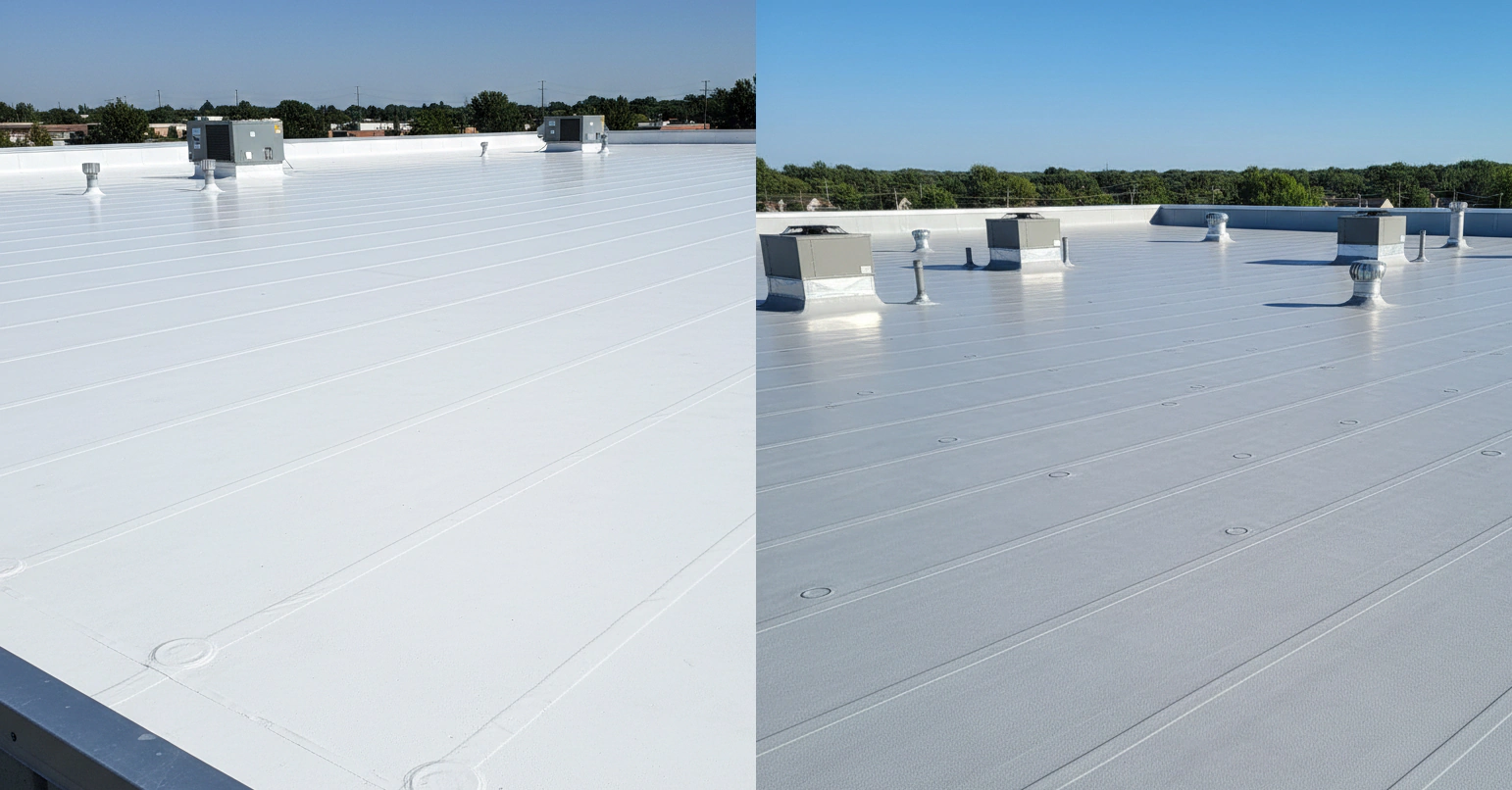
TPO and PVC membranes can appear nearly identical, but there are several ways to tell them apart. Knowing how to tell the difference between TPO and PVC roofing helps ensure the right maintenance and replacement decisions.
- Manufacturer Markings
Look for product stamps or printed identifiers along the membrane edges. These usually list the type and brand. - Feel and Flexibility
PVC feels softer and more flexible, while TPO is slightly firmer to the touch. - Chemical Test
Apply a drop of acetone to a small sample. Acetone will soften or dissolve PVC, but not TPO. - Seam Appearance
PVC seams appear smoother and more uniform because of higher heat during welding. - Roof Age
Older roofs are more likely PVC since TPO became common more recently.
By using these checks, you can quickly determine which type of membrane is on your roof.
How Long Do PVC Roof Panels Last?
A frequent question from property owners is, how long do PVC roof panels last?
On average, PVC roof panels last between 25 and 35 years, depending on installation quality, roof design, and maintenance routine. In some cases, a PVC roof can remain strong for over four decades.
Here are a few factors that affect longevity:
- Installation quality, since poor seams or flashing can reduce lifespan.
- Climate, as constant UV exposure or heavy storms can accelerate wear.
- Roof traffic, where frequent foot traffic may shorten its life.
- Regular maintenance, including yearly inspections and cleaning.
PVC roofing’s durable construction and strong welded seams help it stay watertight for decades.
Which Material Fits Your Property Best?
Both systems deliver quality performance, but the right choice depends on your building’s needs and budget.
Choose TPO if you want:
- A cost-efficient roof for a home or light commercial structure.
- High energy efficiency that reduces cooling costs.
- A modern, recyclable material with reliable protection.
Choose PVC if you need:
- Superior chemical resistance for kitchens, factories, or industrial spaces.
- Longer lifespan and proven durability.
- Flexibility and strength for roofs with more traffic or exposure.
When comparing TPO vs PVC roofing, consider how your property is used, what conditions it faces, and how long you plan to stay in the building. A roofing professional can inspect your current setup and suggest the most suitable option.
TPO vs PVC Roofing: Cost and Value
In general, TPO roofing has a lower initial cost than PVC. It installs quickly and performs well in most climates. However, PVC roofing material provides a higher return over time, thanks to its extended life and chemical resistance.
When weighing TPO vs PVC roofing, remember that total cost of ownership matters more than initial price. A longer-lasting system often saves money in the long run.
Maintenance Tips for TPO and PVC Roofs
Routine care helps both materials perform at their best.
Here’s what to do:
- Schedule yearly inspections to catch small issues before they spread.
- Keep the surface clear of leaves, branches, and debris.
- Check seams and flashing for separation or wear.
- Avoid unnecessary roof traffic and use walk pads when access is required.
With consistent maintenance, both TPO and PVC roofing systems can serve your property for decades.
Final Thoughts on TPO vs PVC Roofing
When comparing TPO vs PVC roofing, the decision comes down to how your property functions and what conditions it faces.
TPO offers energy efficiency, durability, and affordability for homes and light commercial spaces. PVC delivers greater chemical resistance and long-term performance for restaurants, factories, and high-traffic buildings.
Whichever you choose, professional installation and regular maintenance are key to getting the most from your investment.
How Resilient Roofing & Repair Can Help
At Resilient Roofing & Repair, we have served Pelion, SC, and surrounding areas for over nine years, backed by more than 20 years of experience. Our skilled team handles roofing projects of any size using high-quality tools and materials. We focus on dependable craftsmanship and lasting value for every customer. If you are considering TPO or PVC roofing, we can inspect your property, explain your options, and install a durable system that protects your home or business for years.
Call us today at (803) 201-1759 to schedule a consultation with our roofing team.